Wednesday, 20 July 2011

4WD Army Jeep from Chennai to Cochin


This road trip was done in July 2010 while I was working with HDFC Bank at Cherthala -my hometown. I took two days leave, after visiting Deepak at Palarivattom,  boarded a KSRTC bus to Coimbatore from Cochin to attend a friend's wedding reception. I spotted this Mahindra 4WD 550 jeep custom built for Indian Army and Rexy, a friend from college days who used to participate in bike races in and around Kerala with this Suzuki Shogun and Yamaha RX135. I couldn't help jumping off from the KSRTC bus at the next speed breaker and join Rexy to Chennai. My plan was to get down at Coimbatore but I fell in love with this 4WD which was auctioned later to scrap dealers at Chennai and decided to go along with Rexy to pick another jeep from Chennai. On the way to Coimbatore we had to stop at a workshop to change the canvas inside the wheel cup since the front wheels were wobling too much. Well prepared for this, Rexy had all the tools and spares for any kind of breakdown, including two spare wheels, foot pump, two hydraulic jacks, bearings, belts etc...a mini workshop and spare parts shop for a jeep.


We reached Coimbatore at 10pm and met my friend and wife, they were relatively free as there were not many relatives left out and I could chat with him for 15min though I missed out on the vegetarian dishes and good looking Tambhram girls. After a while we continued our journey to Chennai. After another 100km, both Rexy and Nasar were tired and they slept for a while parking on the roadside near a toll plaza. I rang up Nithin and briefed him about my whereabouts, I took shelter under a truck while there was a light shower. We reached Chennai next day morning 10am and went straight to the scrap dealer's yard.


Numerous vehicles from Army at this yard amused me. Shaktiman trucks, Suzuki Gypsy, Mahindra Jeep, Armada - you name any off road vehicle, you will find at least one here. These vechicles come with 98B XXX registration numbers for army. 10 years or later these vechicles will be auctioned as scrap. The dealer will get them to his yard and get an RC book in his name, pay road tax, get insurance etc. Rexy and similar automobile crazy guys will come to this yard and pick one or two vehicles at a price. Later this Jeep or Gypsy will be repaired and repainted with a new life and roll the wheels on road or an estate where 4WD is essential. We started fixing the four wheels so that we can tow the jeep back to Cochin, 700 km. We changed the bearings, lubricated the rolling parts and ensured there is enough air in the tires. Everything seemed fine and relaxing, by evening we retired from the yard unwinding after a night out on NationalHighway. Got recharged and start our journey at 8am on Sunday -at least that is what we planned for next day.


Sunday morning- after a high calorie berakfast, we were all set to start our 700km towing trip. Both old and new jeeps were wed-locked using an A-shaped connecting rod and bolted using U-shaped clamps. The jeep behind our jeep will turn and break as we steer and stop the one in front. Driving is not as easy as driving a single jeep since there will be force to either sides or forward when we take a turn or apply brakes. When we are about to reach Krishnagiri, we found that left front tire is wearing out than normal and the tire surface was abnormally hot. The root cause was not identified so we tried a different configuration for the tires keeping another tire at the left front. While we were changing tires from one side to another, I met Oswin on the road - they were coming back from Trissur to Bangalore. We continued with the new configuration towards Salem. It was found that the new tire is completely worn out in less than 20km! It was clear the tire will not last our next 500+ km. We tried a brand new tire which is expected to run 20000km and tried our luck. It was 10pm and we reached Bhavani, half asleep. The tire was 80% worn out and it would not last another 400km to Cochin from Bhavani. After parking the jeep on the roadside, we slept through the night. Searching for another tire next morning  did not go bad. Tata 207 tire which should be lasting at least 500km was found at Erode. 30hours are over since we started from Chennai and still more than half the distance to go. I got my mobile battery charged from a nearby shop and kept updating Facebook about my trip with pictures.


Finally after various diagnosis and trial and error methods, Rexy found that the driving shafts were jammed at the left front side which was a hindrance for the tire to freely rotate at the turns. It was fixed in 5 minutes with a hammer! We lost 24hours and two tires already!! Anyhow, enjoying the slight drizzle and the cool weather, we drove on NH47 towards Coimbatore. By 2am we reached Angamaly where the workshop is just 10km away. I parted my way with the army jeep and took a KSRTC bus to Cherthala and reached home at 4am. No air conditioner but that was the coolest trip I ever did on road. No mobile car charger - but we were fully charged throughout. 

I am not sure Rexy is doing the jeep refurbishing now. You can contact him at Kalamassery very close of Cochin University  campus; he has a shop named Twinkle.


Perseverance is the key in this mission-completed in 4 days and costing a few tires!!


Sunday, 17 July 2011

Honeymoon in Honey Valley


Rains!! The clattering of rain drops on top of the mangalore tiled roof at my grandmother's home always urged me to get out and drench in the rains. So when I called up Suresh Chengappa asking for accommodation for two, he could not detriment my desire to trek in rains. Once I told him that I hail from Alleppey, he knew I am born and brought up in rains. When I was a baby, my grandmother used to give me bath and she never used to dry my head completely so that I develop immunity to get drenched in rains.


After shutting down the laptops and corporate life, I was home at 7pm on last Friday evening. Megha had packed all the bags and kept the essentials ready- Jyothi Laboratories' MAXO insect-repellent cream as active safety against blood-sucking leeches and turmeric powder as the passive safety once they bite you- are the top priority apart from the usual first aid kit. We also packed two John's umbrellas of 545mm width -imported from Kerala and light weight rain cuts from Decathlon. KSRTC runs volvo buses to Virajpet starting from Majestic at 11:30pm and the ticket costs Rs 400 per head. I was impressed by the fact that we can board any BMTC bus to Majestic free of cost if we are taking a KSRTC bus from there. Our bus started at 11:40pm and the route was Bangalore-Kengeri-Mysore-Gonikoppal-Virajpet. At 5.30am on Saturday morning, we were at Virajpet.


The sleepy town of Virajpet was just waking up to their daily chores sans a few newspaper vendors and auto rickshaws. We walked towards the Private Bus stand around 1.5km away. On the way, I picked up a Malayala Manorama and so excited to read it after a long time. Megha and I debated if Malayalam or Kannada has jilebi look alike script. We pit stopped enroute to have a tea at a 'chayakada' and I was cross-questioned by a police man on why I was taking his picture. I was not. I was taking the picture of the bus stand with the fog in the background. Once I showed him the picture, he was ok. The linguistic advantage in Kodagu region is that you can speak either Malayalam or Kannada. Mix up both and you speak something which is close to the local language.


The private bus 'Ganga' started at 6:50am after its morning ablutions -changing the tires and radiator check up. After 45min ride through the winding roads, we reached the destination -Kabbinakadu junction. Even if you are coming in you own vehicle, you need to park it at a nearby parking lot and board the 4-wheel drive jeep from Honey Valley estate, as the last 4km to the home stay is accessible by a 20 minute 4WD jeep ride or by walking for one hour. This ride was one of the bonus as Ganesh tackled the muddy and slippery jeep track by shifting through the 4WD gears. This reminded me of my trip from Chennai to Cochin towing a military jeep using another 4WD jeep through national highway.


Honey Valley is not a resort- it is run by Mr.Suresh Chengppa and his wife who settled here 28 years back. They have a sprawling coffee estate and you can stay in one of the rooms or huts catering to different budgets. Food is with a fixed vegetarian menu and if you are a carnivore, order in advance and those dishes will be served at your dining table.


Honey Valley has it's own hydro-electric turbine for electricity and bio-gas plant for cooking. Heating water for shower is done by solar and firewood. Many European backpackers come and enjoy the lush greenery and rains as Honey Valley is listed in Lonely Planet and other travel guides. Mr. Suresh is well-read and spoke Malayalam, Kannada, Hindi and English fluently. He has a vast collection of fiction and non-fiction books apart from National Geographic magazines. His calmness and grey hair spoke about his eventful past life and I was impressed at his 'been there done that' attitude. His son is currently travelling around the country and he called home from Kashmir two days back.


Route: Bangalore-Srirangapatna-Hunsur, Virajpet-Kabbinakad -235km; By bus: Bangalore-Virajpet (6hrs) Rs 500, Virajpet-Kabbinakau (45min) Rs 18.

Accommodation: The basic double rooms with shared toilets Rs 350, Double rooms with attached bathroom and geyser Rs 800, 4-bed room Rs 1200. Contact: 0822-238339, 200325, Email: honeyvalley_2000@yahoo.com, http://www.honeyvalleyindia.in/


After a sumptuous breakfast and piping hot coffee made out of freshly grounded coffee powder, we walked to a nearby waterfall taking directions from Mr. Suresh. A friendly dog was guiding us to the waterfall and you will hear other friendly dogs barking when you walk near the fenced boundaries of the coffee estates. After a relaxed 15min walk, we were at the bottom of a 25-feet waterfall with magnificent cascades hidden in the forest. It was not another crowded waterfall with drunk semi-nude men, but peaceful and calm where you can spend hours reflecting on life. We were back around lunch time and on the way back, I was attacked by 3 leeches. The insect-repellent was washed off my feet while walking in water. MAXO was very handy to get rid of the leech and applied turmeric powder at the bites to help blood clotting and as an antiseptic. After lunch, the rains gathered strength and we spent the afternoon gazing at the rains and listening to the clattering of heavy downpour on the Mangalore tiles.


In the evening, sipping hot coffee we discussed our plans to hike Mount Thadiyandamol (1745m) with Mr. Suresh. He was really happy gathering our interest in hiking and he gave me a booklet he had prepared with detailed map and directions for 18 hikes starting from Honey Valley ranging from 2 hours to full-day. We wrote down the whole route to Mt. Thadiyandamol but still I asked him for a guide if available. He was not sure of getting one the next morning, as the tribal people are not greedy and if they have the bread for the day, they did not care to work for tomorrow. Though it sounded very philosophical, I was convinced next day as our guide vanished after showing up in the morning.


After breakfast we started around 10am picking up a picnic bag with bread, cucumber, tomato, jam etc. We reached the "Dry Pond junction" which is the starting point to all the trails and this tiny pond was filled with rainwater. From this point, we had a little confusion about the path towards Mt. Thadiyandamol. Anyhow, we started hiking through the most tranquil and scenic path expecting that it would lead us to the peak. Listening to the numerous crickets and frogs, we walked for almost two hours. Crossed multiple streams skirting the mountain on our left side and making our path through the dense forest and thickets of wild hibiscus. After a while, we could not find any obvious path but could see Thadiyandamol peak and walked towards that by wading through knee length grass and bruising our legs and shoulders against the thorny bushes. It was really adventurous to walk through a path that was not listed in the booklet of 18 trails and both of us were thrilled at the 'Man Vs Wild' episode in our honeymoon trek. Whenever I was confused with my instincts I asked Megha to take the lead.


Suddenly Megha stopped and cried out as something bit her, I was horrified if that is a slither. She pulled out an insect from the ankle in a frantic reflex which looked like a leech but was different in texture and size. Blood started flowing without any indications of clotting. I pulled out the antiseptic wipes and cleared the tiny wound and applied turmeric powder. It did not show any relief and there was a sign of poking pain on her face. Iodine ointment was my next remedy, though in vain. Using a band-aid I tried to cover the wound and we decided to get back. As I write this after 5 days, still a tiny swelling is visible and it is paining slightly. Anyhow, we could not find a viable route to go further and it was just enough time to get back for lunch at Honey Valley. Definitely it was more fun to be in a off-beaten trail than going in a routine trail with a crowd polluting the trails with plastic garbage.


Mr. Suresh was surprised that we lost our way and returned. But he was encouraging and exclaimed 'it is not about the destination; it is the hike that is thrilling'. During lunch, we met a few French travelers and discussed about Catacombs under Paris and Decathlon products at length. Post lunch, we moved to a double room with a common toilet and the verandah was occupied by two ladies - one from Spain and the other from Russia. More backpackers were present in this building and one guy from Delhi was visiting this part of the country to study about frogs as part of his research. Enjoying the rains and a few cups of coffee, we spent our evening. By 7.30pm Mr.Suresh dropped us back to Kabbinakkadu junction. The last bus from Madikeri to Virajpet arrived at 8.20pm and we were at Virajpet by 9.15pm. Our Bangalore Airavat bus was at 10:45 and after dinner, we waited at the bus station. After a short sleep of 5 hours, we were at Majestic bus station at 4.00am. Back to concrete jungle and the only noise is that of harsh horns and screeching brakes not crickets and frogs. If you love rains and lush greenery, Honey Valley estate is the place to head to on any weekend.

Focus on the journey, not the destination. Joy is found not in finishing an activity but in doing it.

Thursday, 5 May 2011

A weekend in Alappuzha


Alappuzha (Alleppey) is known as Venice of the East, with its planned canals - the doorway to the famous backwaters. What can be done in Alappuzha over a weekend? Here are a few things I can think of in this well-planned town, a tribute to Raja Kesavadasan's visionary architecture. The most common touristy attraction is the houseboat cruise. You check in to a larger than average apartment sized houseboat and stay for 23hours. Typically you can check-in on Saturday morning 10 am and check-out by Sunday morning 9 am. While you enjoy your lunch, evening tea, dinner and Sunday morning breakfast, don't forget to carry a book or movie DVD. The houseboats start from 'Finishing Point' named after the legendary Nehru Trophy Boat Race. Finishing Point is 10min walk from the Alappuzha KSRTC bus stand, you need to take a newly-built bridge across the canals or Rs 20 by auto-rickshaw. If you are reaching by a train, you can hire an auto-rickshaw to Finishing Point by paying Rs 40 from the train station, 4km southwest of the town center.

There are more than 1000 houseboats in the 900km network of backwaters across the farmlands in Alappuzha and neighboring districts of Kottayam and Kollam. Long before the network of the roads were built, these canals were the main transport channels and even today some of the far inlands are connected by KSRTC boats than buses. The houseboats are the biggest tourist business in Alappuzha post the former prime minister A.B Vajpayee's famous vacation in Kerala. There are differently sized houseboats suitable for any number of people- up to seven bedroom boats are available. When you reach Alappuzha town, you will be surrounded by many travel-agency reps offering houseboat trips. Contrary to the popular belief, it is not possible to travel by houseboat between Alappuzha and Kollam or Alappuzha and Kochi. The quality of the food and infrastructure varies broadly- from old sinking vessels to palatial ships. It is strongly recommended to check your boat before agreeing for a price, make sure the toilet taps and air-conditioner are working fine.


For a couple, one bed room house boat will cost approx Rs 4500 to Rs 7000 for 23hours. The houseboats will be parked by 5pm in the evening next to the farmlands fringed by coconut trees in the far interior backwaters and coming out of the houseboat and going to the town or beach is not practical. If you want to reduce the cost, but experience the houseboat there is an alternative package. You can check- in the night around 8pm and stay overnight in the boat until 9am. This will cost Rs 3000 for two -dinner and breakfast are included. There will be two staff on board- a driver and a chef to cook the food of your choice. Don't forget to let them know your choice of food before hand, as they need to store the food in advance. You will cough up approx Rs 9000 for a two-bedroom houseboat and Rs 11000 for a three-bedroom. Note that this rate will escalate during the peak season -especially during Onam and Nehru Trophy boat race- Aug 2nd week of every year. Book your tickets through KSTDC for a pavillion seat away from the local crowds if you are planning to watch this mega event with thousands of cheering spectators. Carry food,drink and an umbrella as you have to stay there from 10am to 5pm.

Call Sabu (Cell 9446005514) of Goodwill tours for houseboat booking. His experience travelling all around India while he was in army will help to cater the guests' needs-familiar with food choices and conversant in Hindi, Tamil, Malayalam and English.


Once the boat is parked, you can swim in the backwaters or fish using a bamboo pole and a string machine. Set on foot to visit the nearby villages to watch farming, boat building, coir making, toddy (palm beer) tapping and fishing which makes the backwaters so exquisite. Kuttanadu -the region with the lowest altitude in India, and one of the few places in the world where farming is done below sea level- 300ft below MSL. Kainakary, 10km from Alappuzha by road and 45min by boat is a nice place to see the real Kuttanadu life. You may be lucky to see chundan vallam (snake boat) or canoe construction. If you are adventurous with food, try fizzy toddy and KFC(Kappa Fish Curry) from the local toddy shop. Not everyone's taste buds will tolerate the hot and spicy fish curry or 'kappa' (tapioca) at the toddy shop (Rs 60 for a bottle of toddy and Rs 50-100 for dishes). Ask for 'kallu shaap' if you would like to go on this trails. Consider staying awake in the night for a while gazing the galaxy of stars or waking up at 6am to catch a glimpse of the sunrise reflecting in the huge lake.


If you are on a frugal budget or if you think houseboats are too cheesy, there are some alternatives to watch the backwaters at a cheaper cost. Take a public KSRTC boat from the boat jetty next to KSRTC bus station. The boat jetty is hiding inside the Mangalore-tiled ferry opposite to a swanky jewellery shop on the main road to KSRTC bus station. Hop on to any boat that goes to Nedumudi, Kavalam, Champakulam and you are assured a good experience of backwaters at the cost of Rs 10 for more than 2 or 3 hours. Another option is a long 3hour trip to Kottayam crossing Vembanad Lake and coming back by either boat or bus.

Near bus station along the canals, rented canoe boats are available for a non-guided laze through the canals on a small, covered canoe for up to four people for two hours (Rs 600-1000) - this is another way to run through your Sunday tranquil afternoon before boarding the bus or train. I strongly recommend wearing a life-jacket on these canoes as they can topple easily when unfamiliar feet try to balance. Knowing swimming is not essential but is an added advantage.

If you are not staying in the houseboat, consider staying at a home stay near the beach for an early morning beach experience. Alleppey Beach Holidays Home stay (d Rs 750, with AC Rs 1000), Near Collector's Bungalow, Sea View Ward is an excellent option. Call Jose (0477-2241649, Mob: 9447103852) and book your rooms. From this home stay, walk for 5min passing the railway level cross, you are welcomed by the white sanded beach of Alappuzha and get close to the erstwhile sea bridge ruins and the lighthouse. This sea bridge was used for transportation of food supplies from the vessels to the FCI (Food Corporation of India) warehouse and you will find the remains of the rails along the bridge. Checkout if the boating in the lake near the beach is functional and lay your hands on a paddle boat or a rowing boat. Visit Sree Krishna Ayurveda (0477-329728; http://www.krishnayurveda.com/), near Finishing Point, unwind taking one-hour rejuvenation massage for Rs 600.

Train/Bus to Alappuzha: Taking a train or bus directly to Alappuzha is the easiest way to reach there. If not available, take a train or bus to Ernakulam and board a KSRTC bus from bus station to Alappuzha which will take less than two hours. There will be plenty of buses at the bus station heading south on the NH 47. Waiting for a train to Alappuzha from Ernakulam railway station is not recommended. An auto from Ernakulam railway station to bus station will cost you Rs 20.


Environmental issues - pollution from the houseboat motors and biological waste tfrom houseboat toilets hreaten the backwaters and the community life on their banks. Kerala govt. is enforcing a 'Green Palm Certification' for installing solar panels and sanitary tanks for the disposal of waste. If you are eco-conscious, please try to use the manually sculled boats or public boats to visit the backwaters instead of motorized boats.

Saturday, 30 April 2011

Sikkim: Khecheopalri and Pelling


Yuksom is spelled differently across the signboards- Yaksum, Yuksam, Yoksum are just a few of them - all of them mean the same - 'meeting place of the three lamas', the first chogyal of Sikkim was crowned here by the three lamas in 1641 at Yuksom. Though the Kanchenjunga trekking's main trailhead starts here, this village is still sleepy and not overcrowded by development and tourists. There are very limited options for accommodation or food. Hotel Pradhan( 99330-19979; 97330-92407; d Rs 500) provides home-cooked food if you book in advance and Mr. B.P Pradhan is very friendly though loud. Other options are Hotel Demazong (d Rs 500) where most of the rooms do not have private bathrooms. Hotel Tashi Gang (03595-241202; dRs 1100) resembles a monastery, the best in this tiny village. There are two basic restaurants with friendly staff who serves most of the Indian and continental cuisine (mains Rs 50-100). Ask for HIT beer distilled at Yuksom Breweries, owned by the famous Bollywood actor Danny Denzongpa hailing from Yuksom known for villain roles in Hindi movies.


After finishing our 5 day trek to Dzongri, we were welcomed by the news of a 2-day 'bandh' (general strike) in the state of Sikkim. Not planning to stay further, none of us was carrying enough cash to survive next two days at Yuksom. That night, we arranged a vehicle to go to the nearest town -Pelling- where the nearest ATM is located. Luckily our four hour round trip was not eventful and we were successful in withdrawing enough cash. After extended sleeping hours and laundry work, we decided to visit the photogenic monasteries and trek through the village's sub-hamlets. While riding with Mr Praveen Sharma looking for a poultry farm, local politician stopped our car and threatened us mildly so that we don't drive the next two 'bandh' days. Gupta restaurant guys were giving us food and let us enter through the backdoors.


Dubdi Gompa is the most photogenic monastery at Yuksom, the oldest monastery of Sikkim established in 1701. The steep 1 hour climb is very steep and carry enough water and glucose with you before you start at the trail near the village clinic past the police station. Another photographer's attraction is relatively new Kathok Wodsallin Gompa near Hotel Tashi Gang and this is easy to reach. Inside, you will find a big statue and many paintings of eight manifestations of Padmasambhava (lotus -born) aka Guru Rinpoche or 'second Buddha'. Splendid Nagdhak Changchub Choling, entered through an ornated gate opposite Hotel Yangri Gang is equally photogenic, but beware of the furious guard dogs.


Tranquil Kathok Lake on the trail to Dzongri, near the village school will take your breath away, if visited in the early morning. From here the anointing water was taken for the coronation of the first chogyal of Sikkim in 1641 by the three lamas. The coronation throne is protected at the ASI site Norbugang Park, housing a prayer house, a few scenic cryptomeria pine trees, a huge prayer wheel and a footprint left by one of the three lamas. You will find many foreign Buddhists visiting these places for religious reasons than tourism. On the second day, we visited the local post office and sent post cards. Romit and Divya reserved a jeep to drop them to Jorethang to board their flight frm NJP at 3pm.


Later in the evening, we bumped at Victoria and two other trekking enthusiasts - Anna and Nicholas. Megha and I got excited about their plan to trek from Yuksom to Khecheopalri (pronounced 'catch-a-perry'), a highly revered holy lake, 10km by trekking trail and 30min by road. We signed up for this 6hour trek with the help of two local potter guys. Praveen offered help by transporting our backpacks to Khecheopalri lake as Praveen's wife and son also joined us in this rigorous trek and Sharath and Asha occuppied their seats in the Tata Safari.


We kicked off at 8am in the morning bidding adieu to Yuksom, led by Victoria the group ascended lofty mountains and descended to deep valleys trudging along the villages, scenic streams and hanging bridges. A friendly dog wagging his tail , followed us who shared biscuits and chocolates at our frequent pit stops. This was a heavily blood pumping trek and required good cardiovascular fitness, but worth every step of the trek through the forests. By 2pm, we reached Khecheopalri lake and visited the tranquil premises of the lake, the prayer wheels lining up the jetty, the prayer flags fluttering in the wind. After having lunch at the small shop near the parking lot, we booked a jeep, Rs 2000 to Pelling. As the shared jeeps leave at 6am in the morning, the only other option was staying overnight at the basic lodge near the parking lot.


Saying good bye to Victoria and friends who headed to a home stay, we reached Pelling after two hours and checked in at Hotel Simvo (03595-258347, d Rs 500-1200). Bargain for a room on the upper floors to catch an early morning view of Kanchenjunga, though the lower rooms are cheaper. There are many other hotels along the two kilometer stretch of Pelling as many Indian tourists throng here for a dawn view of Kanchenjunga and this small touristy town is well connected by bus and taxi. Be prepared to pay upto 50% more than the M.R.P ( Max. Retail Price) for packaged foods and supplies. Book your bus tickets at SNT Counter at Hotel Pelling (Rs 100, 5 hours) and you will be picked near the roundabout in front of Hotel Garuda. Replenish your cash valet at the SBI ATM if you are heading to Yuksom or any smaller villages. Visit any restaurants along the road to Lower Pelling but beer is scarcely available in the restaurants. You can head to Darpa village taking a day trek and stay in one of the homestays if you are averse to the tourist crowds.


After watching panoramic views from the helipad, walking 25min from Upper Pelling's roundabout, we reached Sikkim's second oldest Nyingmapa gompa- Sangachoeling Gompa. Set on top of a ridge overlooking the valleys, this gompa houses a monastic school and magnificent murals. We joined the junior monks in their games during their lunch break and reflected about living on the edge, sitting on the edge of the ridges. After lunch, we headed to Pemayangtse Gompa- the oldest gompa in Sikkim-30 min walk from Upper Pelling. Overlooking Rabdentse ruins- royal capital of Sikkim from 1670 to 1814, this gompa boasts of a huge prayer wheel, colorful interiors, many murals and statues.


Next day, the SNT bus left at 7:30am and we reached Siliguri by 1pm. We headed to Nepal border and had lunch at Kakkarbhitta crossing the no-formalities border gate. On the way back to India(!), I met with a friend Liju, who is working as a constable in the all-women para-military border force SSB (Sashatra Seema Bal). We boarded the train to Kolkata at 9pm and spent the next two days tolerating the scorching summers of Kolkata. Victoria Memorial which depicts British(?) India's history and culture in a different perspective, iconic Howra bridge- a few among the local attractions we could run through. We used the metro, tram, taxi and bus in this erstwhile capital of India with architectural tributes of the past colonial glory. Unwinding the last night of our trip at a disc at The Park hotel, enjoyed the late night life of the city of Rasagolas. Reaching Bangalore on Sunday night did not make us think Bangalore is any cooler, blame the Global Warming. Not exceeding our budget, the total cost of the 16 days trip to Sikkim was Rs 1000 per hed per day including the train and return flight tickets. A priceless trip with memories of many first time experiences!!!


No one realizes how beautiful it is to travel until he comes home and rests his head on his old, familiar pillow.  ~Lin Yutang

Tuesday, 26 April 2011

Sikkim: Yuksom-Dzongri Kanchenjunga trek


Two is a company and three is a crowd - that is what I was thinking when I discussed with Sharath about travelling to Sikkim in a group. Many aspirants dropped out after reading a detailed account about frugal backpacking trip which required good fitness, preparation and a mindset to live with basic creature-comforts. It was six of us - Romit & Divya , Sharath & Asha, Megha & I - who were on a Friday night train from Bangalore to New Jalpaigudi. We celebrated Sharath & Asha duo's first wedding anniversary with a cake and candle. Obattu prepared by Megha's mom deserves special mention in our culinary delights, apart from the dinner bought by Srini and roti/rasagolas at Malda. After 2D/2N in the train with food-sleep-talk-leg pulling -games cycles, we stayed overnight at NJP at Hotel Sahara( NJP Station Road, d Rs 550).There are many hotels on this road which is 10min walk from the station, while cycle rikshaws will surround you to get a commission by taking you to a hotel of their choice.


On Monday morning, we were welcomed by a travel agent with his Jeep for an unbelievable Rs 1200 for a group of six. Later, the cross-selling agent was offering us package tours in Sikkim. Leaving him behind, we headed to Siliguri (shared auto Rs 15) and boarded a comfortable bus (Rs 100, 6 hours, Tenzing Norgay bus station) to Gangtok. Enjoying the scenic drive across Teesta river and a few hydro-electric projects , we reached Gangtok by 2pm after a lunch break. Watching daily life in Gangtok, we had to walk for an hour to find a nice and cheap accommodation at Hotel Highland(31ANHWay, d Rs 600). Closed to vehicle traffic, MG Marg at Gangtok reminded me of the Champs Elysee in Paris as it looked like a florist's shop rather than a busy road in India. Strolling along MG Marg, we checked out different options for a 5-day for Kanchenjunga trek at Yuksom-Dzongri trail. Altitude Tours & Travels (Tourism Bldg, MG Road, 9832370501; www.trekkinginsikkim.com) is a good pick- Rs 1400/person/day for a 5 day trek. This fare includes your porters, yaks/mules, food, accommodation at trekkers-hut (sleeping bags/mats) and two nights stay at Yuksom. There are many tour agents along MG Road, use your bargaining skills before you sign-up. Chilling out at Tangerine(Gound fl, Chumbi Residency, Tibet Rd; beer Rs 80) at the Japanese-style floor-cushioned bar was the best way to unwind sipping Dansberg Blue beer.


Tuesday, after handing over the documents- ID proof, two passport size photographs, we were ready to take a shared jeep (Rs 150, 6hours) to Yuksom around noon. The best possible capacity of these long-chassis Mahindra jeep is 11 (3-4-4) and if they squeeze in one more person, it is tad tiring for this six-hour trip. Charming route will not get you bored - iron bridges, construction sites, frothy white rivers, lovely people and village life. We checked in at Hotel Demazong (d Rs 500) where backpackers pile up and if you are lucky, you will get one of the three bedrooms with private bathroom. Dined at Gupta restaurant, serves almost any cuisine in the world. We met our guide Deepak at the hotel and other potter buddies were ready at 8am. Enjoying the fresh air of Yuksom, we compacted our luggage to 50% - to make the mules' life easier- leaving three backpacks at the hotel reception and carrying the essentials in our daypacks. You can leave anything that needs electricity as there is no power at the trekker's hut. You can arrange your permits from Yuksom but may have to wait for a day to sort out the paper work.


Yuksom at an elevation of 1780m(5840feet) is the starting point of Sikkim's most rigorous trek to Goecha La at 4940m(16200ft) and this whole trek will require 7 to 10 days depending on various factors- weather, acclimatization etc. Acute Mountain Sickness (AMS) will hit once you go above 3000m(9800ft) and the fastest will be the first one to get by AMS. Headache, lethargy, dizziness are mild symptoms, which may develop more severe and can be fatal. You can treat mild symptoms by staying at the height you reached for a day or two and popping up a paracetamol will help to alleviate headache. If condition aggravates, descending to a altitude of 500m less is required and if that doesn't help, hospitalization is essential. Hydrate yourself drinking plenty of fluids and water. Do NOT drink alcohol. Carry thermals, fleece jacket, Down feather jacket, thick trekking shoes, woolen socks, Down gloves, skullcap with you to be warm in the high altitude.


Our trek was planned into 5 days.
Day 1 - Yuksom1780m(5840ft) to Tsokha 3050m(10000ft) - 9 hours - hiking 5000ft.
Day 2- Tsokha to Dzongri 4025m(13200ft) - 5 hours- ascending 3200ft
Day3- Round trek to Dzongri La 4550m(14930ft) -6 hours- climbing to 1730ft.
Day4 - Trek back to Tsokha and give rest to trembling knees.
Day5- Back to Yuksom and unwind sipping a beer (HIT).

On day one, hiking through Rathong Valley past a village school, check post and a few traditional village homes, the ascent is gradual and enthralling through the unspoilt forests and a few hanging bridges. A few stretches in this phase were blood pumping and we were not able to catch up with the yaks and mules who were moving at a constant pace. A few fellow trekkers, European travelers passed us after a few hours. We stopped at a trekkers'-hut for lunch and it was more than a basic lunch at the mountain ridges. Crossing a few hair-rising hanging iron bridges, damp and wet rocky trails, thunderous water falls (many heard but not seen) this hike demanded more cardio-vascular fitness. Sunlight was scanty through this green forest and thick fog was hiding the trail. At Bakhim, while stopping for a tea-break, we met with Praveen Sharma and his family with a wonderful mountain dog -Scooby. After catching up with Sharath and Romit couples, we strolled up the next 300meters, watching mist-soaked magnolia flowers. Taking a few short-cuts reduced the distance but increased the heart rate to three digits. After using most of the body muscles and those below torso in particular, Nike Run Club stretching sessions helped us to rejuvenate the sore muscles.


Reaching the rustic hamlet of Tsokha after nine hours was a big sense of achievement. Sipping hot tea and munching biscuits, we were chatting about our enthralling experience hiding our tired and cold feet in the sleeping bags- all six of us in a single room at the basic trekkers' hut with no electricity. There were another two dozen hikers and potters thronging various huts and staying in the tents pitched outside. After a sumptuous dinner, we did not miss the chance to try tongba- in a girded wooden tub of fermented millet seeds onto which we poured boiling water and sip the resultant liquid using a bamboo straw.


Ideally we should have spent two nights at Tsokha for acclimatization before ascending to Dzongri 4025m(13200ft). We started the next day morning at 8am to Dzongri and the trail was quite difficult as this was at the altitude of more than 10000ft and breathing becomes more tiring. After a few hours, we were excited to see the snow patches on the way and two hours later, there was just snow everywhere. Trekking through 18inch thick snow was enthralling amidst the snow fall, keeping an umbrella helped not to get wet. Keeping a good pair of footwear -running shoes or sneakers don’t help in this trail; invest in a proper trekking shoe- will help you from falling on the snow. Skating through the downhill stretch was real fun. As we were late to reach Dzongri for lunch, at around 2pm our potter friend carried a kettle with piping hot tea and that was a big relief for all of us. We reached the meadows of Dzongri and collapsed and cuddled up on the floor of the trekkers' hut main hall as the hut got booked-out and we could not get a room. A slight headache was affecting all of us and staying at Dzongri one more day was ruled out as two of us were pretty sick of the high altitude and bitter cold.


Though the night time mercury reading was -3 degree Celsius, getting up at 5am next day morning, 3 of us climbed up a nearby hill to catch a glimpse of magnificent Kanchenjunga ranges. Going to Samiti Lake 4200m or Goecha La 4940m was not possible in 5 days and as this was our first high altitude trek, we did not want to go higher. Washing face in the water formed by melting ice at 13200ft - I can't express that in words! After breakfast, we decided to descend to Tsokha- the return is the same route, though the weather was not permitting a speedy descent- rains, muddy rocks and slush. We reached Tsokha by evening and rested there for a day chatting with Victoria- an English traveler from Germany. Romit and Sharath tried their hands on laundry and the radio was playing English songs and a faint live commentary of Cricket World Cup. Next day, trekking down to Yuksom was more than pleasant.


On the way back, saying the slogan 'If you are not trekking on the edge, you are using too much space on the trail', I was stepping on the stones at the edge of the trail. One of them just fell off and two seconds later, I was hanging onto a bush like in the movie Cliff Hanger. Megha looked back and did not see me on the trail and she found me hanging in the air. I saved my water bottle first and then calmed down Megha and myself. Slowly I could climb up, thanks to the strong roots of the bush. Hereafter I was using the extreme left side of the trail instead of the edges. We reached Yuksom by evening and checked into the hotel after our successful 5 day trek to Dzongri in the Kanchenjunga ranges- many first time experiences in this eventful trek.


Your attitude decides the altitude you reach!

Monday, 7 March 2011

Wayanad- Chembra and Meenmutty


Wayanad – the best location for treks in Kerala. If you love jungles there are numerous options – Thirunelly, Tholpetty are just a few places where you can’t get through without a wild animal -deer, gaur, elephant- encounter. I visited Wayanad in July, 2009 during a heavy floods season – the biggest floods since 1952. Monsoon is the wrong time to go for a trek to Chembra peak- a major goal this time. Inspired by Sandeep’s trekalog- http://usandeep.com/trekking/chembra2.html  Megha and I zeroed in at Chembra peak trek in Wayanad after considering Pakshipathalam and Thrunelly jungle trek options.

As we wanted to experience the backpacking thrill, I firmed up to take mass transport to Wayanad. Another reason was that Bandipur forest will be closed from 9 pm and 5 am and driving through Bangalore-Mysore-Bandipur-SulthanBathery is not possible on a Friday evening.  So I booked tickets to Kalpetta on a KSRTC Airavat Volvo bus for a cost of Rs 400/- per seat.
ValleyView Avenue Homestay at Kanthanpara, Rippon, Meppadi, Wayanad (Rs 2500/- including breakfast, dinner) is one of the most recommended homestays in Wayanad. You may contact Jinoy  at 04936 280550/09349423910 to book your rooms. Jinoy was exceptionally helpful to book return tickets from Kalpetta to Bangalore as KSRTC Airavat did not have a boarding point on the way back at Kalpetta. He will organize local transport to pick and drop you to various points from the home stay at a cost of Rs 1200/-

We were at Shanthinagar bus station at 8:30pm to board the 9:45pm bus mitigating the risk of Bangalore traffic snarls on Friday evenings. While waiting  for the bus I sneaked into the Sri Lankan stories from Megha’s  New Year trip, it was 10:30pm when we boarded the bus...with just two backpacks, we were looking like experienced backpackers at the bus station amidst a crowd of passengers and bundle of huge luggage. As 4:30am was ETA to reach Kalpetta, I appealed the bus staff to stop at Kalpetta and wake me up.

4:30am at a small town in Kerala was not eventful  but well lit up with a few newspaper boys. Jinoy and his helper Joby reached in a Maruti Omni van to the town in 30min to pick us. Valley View Avenue was true to the name as it was an excellent place amidst the coffee estates and overlooking Soochippara  waterfalls, though thick fog was covering the waterfalls mostly.
After a short nap and breakfast, we were ready to visit Meenmutty falls- the biggest in Wayanad-which was around 20km from Rippon. As we take the Meppadi-Vaduvanchal road, take a left turn at Vaduvanchal to visit Meenmutty falls. Once we pay Rs 300/- for upto 5 people, a guide will lead us to the foot of the falls. Vana Samrakshana Samithi ( Forest Conservation Forum) will ensure that you don’t carry even one ounce of plastic with you and if you want to carry a plastic bottle you will have to deposit Rs 100/- with the VSS staff as a security refund. Being in the anti-plastic crusade I gave unsolicited advice to Jinoy and Joby against mineral water bottles and plastic usage. They were pleasantly surprised that we were carrying enough water with us filled from the home stay.  The trek distance to falls is less than 2km but it was not an easy terrain and the VSS had tied some ropes at the most difficult and precarious trails inside the jungle. Being a Saturday a crowd of 50+ people were present at the waterfall premises but alcohol consumption or nudity  was not there that I have seen at most of the falls in Karnataka. So this place is recommended for women travellers.


After spending almost an hour at different perspectives of the falls and capturing the beauty through the camera lens, we started hiking back through a different route. A tad more difficult but less crowded route was heavily blood pumping after a while. On the way back, we found a shack selling water melon, butter milk to quench our thirst and rest a while. Gooseberry preserved in salt water brought me primary school memories as I used to buy the same for 2 paisa per piece in 1984! We headed to Bathery town boarding a local private bus to have lunch and visiting 13th century Jain Temple was the agenda. Edakkal caves was closed for restoration and Pookote Lake was not feasible as it would be closing at 5pm. Megha was  amused at the bell and thread infrastructure in the local private bus to communicate between the bus driver and door keeper to start and stop, and I realised that this mechanism is unique to buses in Kerala.

12th century Jain temple (8am-6pm) with marvelous stone carvings reminded me some of the history lessons from school and though not a big complex, this ancient temple and the tranquil premises were well kept by ASI (Archaeological Survey of India). The snake puzzle on the temple pillar was not easy to solve and I carried back a photograph of the same to solve it later. We were absorbed by a light drizzle in the evening and travelling back in a local private bus and KSRTC bus was the best way to experience the local culture.


Visiting Kanthanpara falls very close to the home stay was another exhilarating experience as well pillion riding with Joby on his motorbike. Joby’s culinary skills welcomed us in the evening with snacks/tea and with a sumptuous dinner in the night. Watching Soochipara falls from the balcony and enjoying the piping hot tea made this home stay worth every buck we pay.


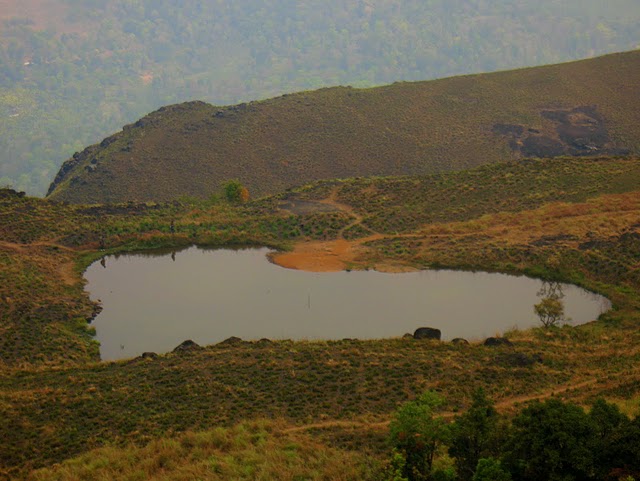
Next day morning, after a few photo-ops of the morning fog, we packed our breakfast and reached the entrance of Chembra peak by 8:30am, thanks to Jinoy for dropping us. After paying Rs 500/- (up to 10 people) and guided by the VSS staff we started our trek to Chembra peak carrying a hefty breakfast in our daypacks. Started at 9am and by 11am we were at Hridaya Saras- heart shaped lake. Breaking our trek for breakfast and finding a cool and shady spot inside the jungle we relished puttu and kadala curry with our guide. The bananas from Jinoy’s backyard were cherry on the cake.  After fueling ourselves we started on a slow pace to complete the trek with a target of reaching the peak at 12:30. The weather was near perfect as the clouds kept the scorching sun hidden most of the day and the cool breeze kept sweating away. Guide was sceptical about reaching the peak and was a little discouraging, as he kept on asking if we are retiring half-way. VSS should appoint more encouraging staff as guide who does not hurry or discourage the trekking enthusiasts who come to Chembra peak. He was boasting about foreigners completing the trek in 5hours and he was proud of the fact that generally people will go back from Hridays Saras and I think he was expecting us to do the same so that he can reach back for his afternoon siesta. Being the highest reachable peak in Kerala and South India, this peak is also the highest peak at 6890 feet sans the Himalayas is easily reachable on foot. 


After 4 hours, at 1pm we reached the peak and that was a sense of achievement scaling the last 3 peaks in one hour.  We enjoyed the beauty for 30 min on top of Chembra peak and started trekking down in a while. By 4pm, we reached the foothills and we met Jinoy and Joby on our way to the main gate. After a short eat of bread and the left over kadala-curry, we had an early dinner and was ready to leave ValleyView Avenue home stay and the mesmerizing lofty mountain and deep valleys of Wayanad by 9pm in the night. Our extremely gracious hosts dropped us back to Kalpetta town to board a Kallada bus to Bangalore and the trip came to an end next day morning at 6am once we reached the concrete jungles of the IT city.

Wednesday, 29 December 2010

Cherrapunjee- Hidden Treasure in Abode of Clouds


A solo traveller is never as isolated as the term sounds. Even if I leave home alone, my journey will be lively with the company of local people and other travellers. Read the full story...


The British used ‘Scotland of the East’ catchphrase to describe Meghalaya’s dramatic waterfalls and Rocky Mountains. I would not think this is an overplayed sobriquet. Meghalaya is ideal for both the armchair and adventurous traveller. Once you are in Guwahati, don’t wait for a permit, just board a mini bus (Rs 78, 4hours) from ISBT terminal. Alternate option is to grab hold of an Indica or Sumo from Paltan Bazar for Rs 150/200. If you love sexy curves, bring your own vehicle and tackle the winding roads of Meghalaya- good tarmac and splendid views; I was missing my Yamaha RX100. Once you cross the Assam border there are just three colours- blue sky, green forests, black roads. After a shameless bargain, I could obtain a bed at Hotel Blue Pine (0364-2229814, GS Road s/d Rs 300/600 geyser, TV). Hotel Ashuthosh Inn (0364-2221276/94361-65135, s/d Rs 550/850) and Hotel Rainbow (0364-2222534, d Rs 700) are two more options on G.S Road. Met with Mr.Biju Joseph- a friend of HV Kumar and he briefed me about a few sights nearby and Mawlynong village. MMTP (Mallu-Mallu Trfr Protocol) worked well between us.


Shillong:
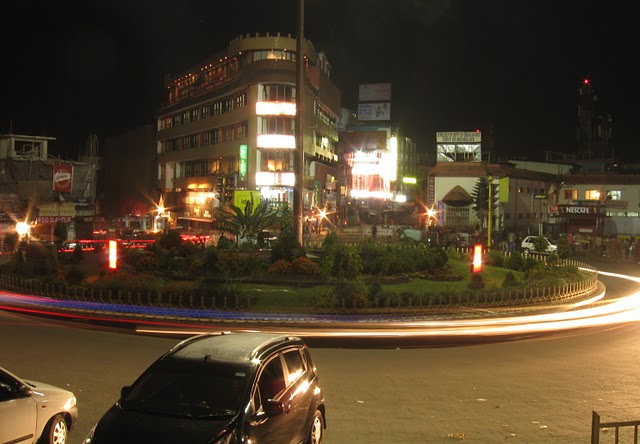
At an altitude of 4,908 feet (1,496 m) above sea level, shivering evenings at Shillong call for a fleece jacket. Walking around Police Bazar, Bara Bazar and Ward’s Lake gave glimpses of Khasi culture. Khasi women wear a pinafore in checked cotton, tied up on one shoulder. Including women, everyone chews betel leaf; lime and areca nut go together. Evening food stalls, western-clothed college students and the tourists flocking around it was more crowded than I was expecting. Yellow-and-black Maruti Suzuki 800s ply as city taxis carrying a minimum of seven people and it can go up to ten (Rs 5-10 per hop). Shared taxi is a good concept- 1)Cheap 2) Low carbon footprint 3)Always a girl is sitting next to you!


Meghalaya Tourism offers package daily tours to various places of interest, check their office near MTC bus stand on Jail Road if you are an armchair tourist. English is more useful than Hindi; many of them speak first-rate English with a Welsh accent without any trace to the Indian language influence, thanks to the Welsh missionaries. Most of them are Christians and religiously attend church on Sundays.


Rise with the sun and you will not miss the fun. I was using Google Maps on my cell phone for directions, thanks to Savindra Tiwari-Sachin’s brother who gave me a Meghalaya mobile connection. After munching an omelette and noodles, I made use of the Hindustan Bedford city buses to hop on and hop off to go around the city. After photographing All Saints Cathedral, Welch Presbyterian Church on Kachari Rd–illustrations of the Colonial timber architecture, I walked to Don Bosco Museum of Indigenous Culture (http://www.dbcic.org/ near Sacred Heart Theological College, 9:30am-3:30pm). Tours at DBCIC last for an hour with excellent audio visual presentation and tribal artefacts displayed in the seven storied tower. Humbled by the tribal life and dance forms of the Northeast states I acknowledged the fact I have seen very little of this region so far.


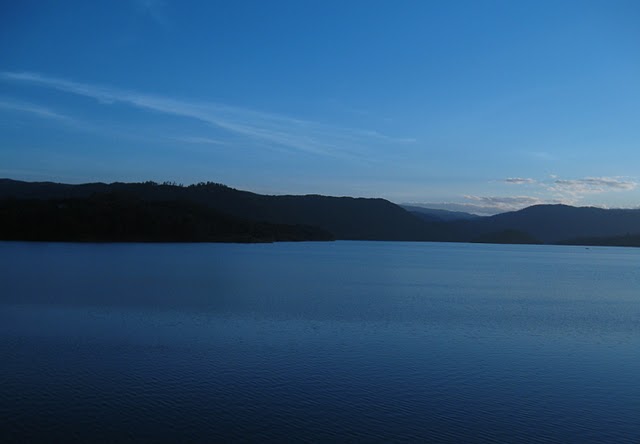
Umiam Lake was my destination after a yummy lunch – pork noodles and sizzling soup. Spread over 220 square km, popularly known as Bara Pani meaning Big water is 17km north on the Guwahati-Shillong road which you can’t miss; by shared Sumo Rs 20, 40minutes. There are many adventurous water sports if you are not aqua phobic. Later in the evening, I met with Ms. Carol at D.D Laloo & Co, G.S Road- they sell camping gears and two colourful tents dragged me to this shop. Carol (Tel: 9863115302) takes care of the cleanest village in India- Mawlynong and as there was no easy mass transport to this village I decided to head to Cherrapunjee and got Mr. Bansan’s (Tel: 9615093898) contact from her and confirmed a bed at his hotel.

 Sohra village (Cherrapunjee):
A sleepy town with basic infrastructure compared to crowded Shillong; 60km from Shillong, you can reach this statistically wettest place in the world by a shared Jeep/Sumo for Rs 70. The telephone exchange at Sohra is out of order for last two years or so! Reading from Lonely Planet, I was riveted to the idea of trekking down to see the ‘living root-bridges’; so nothing else was not a major treat for my camera- Nohkalikai Falls, Mawsmai Caves, Monoliths and grassy moors. By evening, I met with Bansan; a tourism graduate who left his career at Pune and running a hotel/restaurant at his hometown - we had a long chat for hours. It was like meeting an old friend again after a long time; strangers are friends yet to meet. Bansan mentioned that he is going fishing to a nearby river with his friends and I casually asked him. “Can I tag along with you?” Though he was dubious about my fitness to trek down to the riverside and stay with them with minimal creature-comforts, I could convince him I will do anything to enjoy the nature and reiterated that I am not a tourist but a traveller. Sharing a fag and chewing a betel leaf with him made our friendship even stronger. I checked in at his place - Halari Restaurant (near Police Station, s/d Rs 600/800), the best accommodation in my trip.


Living Root Bridge:
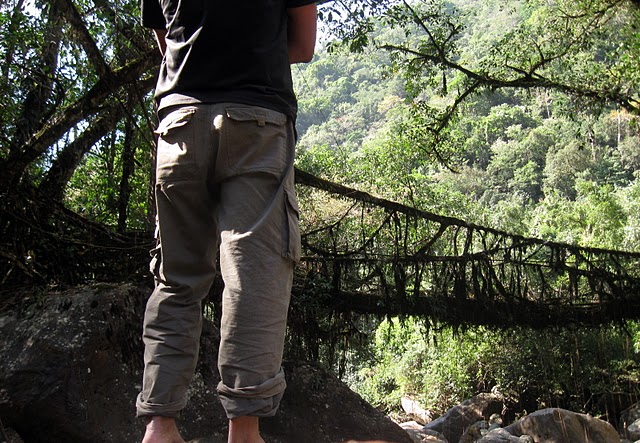
Next two days’ agenda was trekking down to Meghalaya’s unique ‘living root-bridge’. Bansan gave me a hand-drawn map to reach the root-bridges and made arrangements to stay overnight at Nongriat village. Ficus Elastica tree-roots are trained over a period of more than ten years by directing the upper roots of the trees to the other side of the river and penetrate the soil. The roots gain strength over time and form a sturdy bridge and some of them are 500 years old and the “Double Decker” is the most legendary.


At 8 am paying meagre Rs 10 for breakfast- two puris, sabji and a red tea, I walked down to Mawluh village past Cherranpunjee Cement Ltd factory. Bansan was waiting near his house at his village and gave me the directions to the bridges. Though there was an option to take a taxi to Mawshamok, next 10km walking was appealing due to the flora/fauna and pleasant weather. Walk past the tiny hamlets of Mawshamok and Tyrna- your last option to get food-Lumsophie will welcome you with millions of butterflies of various colour and size. Giant spiders cast their enormous web to catch these sexy beauties. I was spellbound by these fluttering splendours and just watched them standstill. There were a few set of concrete steps going down and I chose the first set seeing the tiny board of ‘living root-bridge’. A few dozen steps past, I did not know how the next few hours were spent and I was deep inside the forest. Natural springs, butterflies, steep up and down trekking-finally; I was at the root bridge-the unique architecture in the world was worth the physical strain. Nongriat village was supposedly after the root bridge, so crossed bridge and hiked for another one hour but could not find my way further after a waterfall. I started digesting the reality that I am on the wrong trail, hiked back to the starting point and I lost my way. Though my fear factor is close to zero, Man Vs Wild episodes flashed through my mind. I did not have the equipment or skills of Beary Grills; one packet of biscuits, water from the springs, magnetic compass and following my instincts –I was back to Lumsophie village by 4pm- after a good adrenaline rush. There I found the countless concrete steps over the next 3km to the double-decker, but decided to return as I hated concrete steps and I was running out of energy after 8hours of hiking. Got back to Mawshamok and while munching some snacks; I befriended with a gentleman from that village on his way to Shillong who offered a drop back to Sohra and I was back at Halari Restaurant.


Next day, I took the same hiking path to see if I can go further after the water fall. Cederic from France – I met him during breakfast -was an avid rock climber and he joined me in this trek. Both of us could not find any route further the water fall and returned by 4pm and had lunch at a tiny restaurant at Tyrna- rice and boiled pork; the smart and attractive girl at this place spoke fluent English, cooked two omelettes as a bonus. There were a dozen kids aged around two or three saying ‘Hi’ to Cederic and asking him ‘What is your name?’ We got a taxi back to the hotel; bon voyage to Cederic and I was looking forward to go fishing next day. Double-decker? Next Year!


Trekking down to the River:
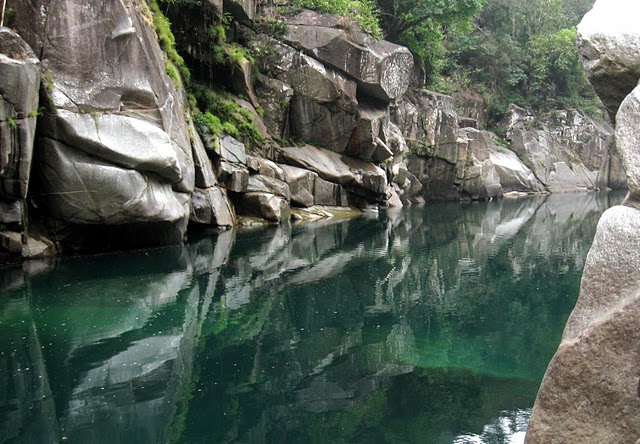
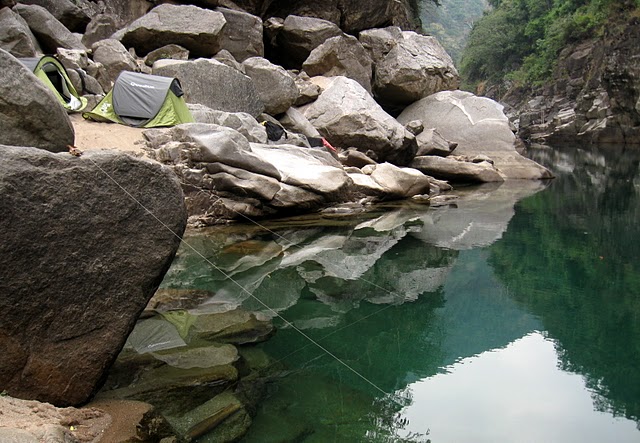
Since 8 am, I was ready and waiting for Bansan and friends. They arrived at 11 am with tents, sleeping bags, grocery and fishing rods. Aaron Laloo (Tel: 9774031871) owns XSV adventures and organises camping tours, trekking, hiking etc in Meghalaya. Sympian was the fourth person- works at the cement factory. We were dropped 2km from the town to start trekking down to Lyngam River. After two hours of knee-breaking steep trek, we reached a tiny village and two other villagers- Bah Pen and his cousin joined us. Their hospitality was commendable and they provided red tea and some snacks. In their baskets, there was a chicken travelling with us and some other food items. By evening after 6 hours we reached the riverside. Pristine blue coloured crystal clear water! Tranquil and pleasant weather and musical waterfalls! I can’t ask for more in life. We pitched our tents and a makeshift kitchen was ready. Delicious fish curry and rice was cooked for the dinner– never had such a tasty fish curry -kudos to Bansan.


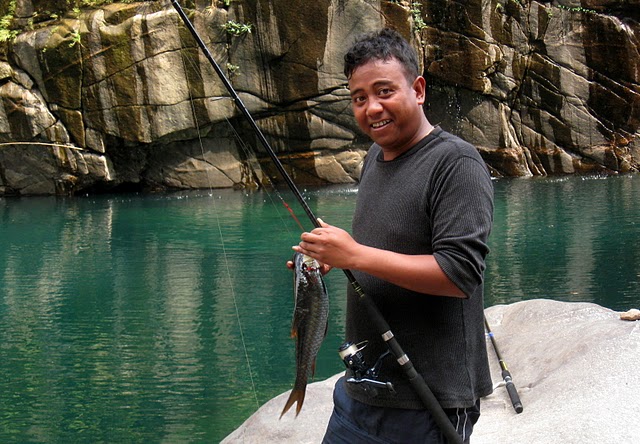
Next day in the sun-soaked late afternoon, I took pleasure in swimming. Later, I learned from Bansan that not many knew swimming and they were watching me with admiration. Bamboo canoeing was another tough but cardiovascular activity. There was a hair-rising wire bridge right across the river to cross and reach other villages. I made tea in the evening and pop corn was our snacks. We were camping in tents for two nights and three days. Fishing, swimming, rock climbing, bamboo canoeing, cooking, bonfire were the highlights. We relished smoked pork, baked beans, chicken and fresh fish with rice for meals. Aaron explained fly fishing and demonstrated the same. I was amazed seeing his toolkit and various gadgets for fishing- he had been doing this since childhood.


On the Rocks!
Bah Pen and his cousin amazed me with their life skills-they have a solution for every problem from nature. They used tapioca as food for fish and immersed the baits in finely cut rectangular blocks of tapioca. Compared to the modern fishing rods, bamboo poles and homemade wheels toiled better in fishing; Bah Pen placed his baits strategically after spotting big arm size fish resting on the rocks in the river belly. Mercury was hovering around 14C; a bit chilly at night and warm during day. Chicken was carbonated entirely before cooking and rice was cooked in water mixed with chicken blood - called 'Jadoh' in Khasi. After three days of living with bare basic creature comforts, I was a lot contented with life. Sipping rum and brandy, smoking French tobacco and local ‘Joy’ bidi, chewing betel leaf, enjoying the camp fire, I lived my ‘reclaimed’ life –next to riverbed, sleeping in tents and – ON THE ROCKS!


Khublei Sohra!

By Sunday, we trekked back to the town, taking multitude of breaks and we were back at Halari by 7pm and Pork Hakka noodles welcomed us. I stayed two more days at Halari and took a Sumo back to Shillong, and then I was a bit satiated with 4 weeks of travelling, searching for new friends, adventure, and experience. I would go back to Cherrapunjee during monsoon (Apr-June) to enjoy the dramatic thunder showers.

I booked a tatkal ticket GHY-ERS using NGPAY from mobile and got back to Guwahati to board that train. Stayed at Ananda Lodge (s/d Rs 140/200 MN Road, Ph: 0361-2544832) for a day. During my return trip, I got another friend in the train -Ms. Liju –she is working in the paramilitary force SSB (Sashastra Seema Bal) guarding Indo-Nepal border. When I reached Kerala, the pouring rains welcomed me and I felt so good to be home. A dream of visiting Northeast India was fulfilled- was planning since 2008; indeed it was worth waiting two years!

Footnote:

The no of plastic bottles I bought in 30days is ZERO. I drank from restaurant/hotel jug, tap water at railway station, natural springs in forest, river water while camping and my tummy was never upset. Bottled water is just a marketing gimmick. At  the rate of 5 litres of water per day I should have bought 150 bottles.


BEEN THERE, DONE THAT!